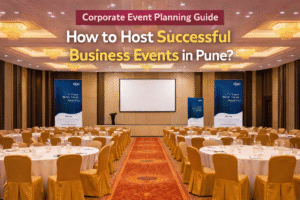
 Corporate events have become essential business tools for companies across Pune’s thriving IT and manufacturing sectors. Whether you’re organizing a product launch, annual conference, team-building retreat, or client appreciation evening, successful business events require meticulous planning and flawless execution. This comprehensive guide will walk you through the complete process of corporate event planning in Pune, from conceptualization to post-event analysis.
Pune’s emergence as an IT and business hub has created sophisticated demand for professional event spaces and services. With Hinjewadi, Magarpatta, and Pimpri-Chinchwad hosting thousands of companies, the city offers excellent infrastructure for business gatherings of all sizes. Let’s explore how to plan corporate events that achieve your business objectives while staying within budget.
Corporate events serve multiple strategic functions that directly impact your organization’s bottom line and workplace culture. Understanding these benefits helps justify event budgets and set appropriate success metrics.
Team Building and Employee Engagement: Regular corporate gatherings strengthen interpersonal relationships that translate to better workplace collaboration. Research shows companies investing in team-building events see 78% higher employee productivity and significantly lower turnover rates. Annual celebrations, achievement recognition ceremonies, and team outings create shared experiences that build organizational culture.
Client Relationship Development: Business events provide invaluable face-to-face interaction opportunities with clients and prospects. In our digital age, personal connections formed at corporate dinners, seminars, or networking events often close deals that months of email communication couldn’t achieve. Client appreciation events demonstrate value beyond transactional relationships.
Brand Visibility and Positioning: Well-executed corporate events position your company as an industry leader. Product launches, thought leadership conferences, and industry seminars showcase expertise while generating media coverage and social proof. Events create content opportunities—photos, videos, testimonials—that fuel marketing campaigns for months afterward.
Knowledge Sharing and Training: Professional development events, workshops, and training seminars keep teams current with industry trends and skills. These educational gatherings often deliver better ROI than traditional classroom training through interactive formats and peer learning opportunities.
Recruitment and Employer Branding: Campus recruitment drives, career fairs, and company showcases attract top talent. For Pune’s competitive tech talent market, events that showcase company culture and opportunities differentiate employers in candidates’ minds.
Business Development: Networking events, industry conferences, and B2B meetups generate qualified leads and partnership opportunities. Strategic event participation can expand your business network more efficiently than months of cold outreach.
Measuring these benefits requires setting clear objectives before planning begins. Define whether your event aims to generate leads, improve employee satisfaction, launch products, or achieve other specific goals. These objectives will guide every subsequent planning decision.
Understanding different event formats helps you choose the right structure for your business objectives. Each type serves distinct purposes and requires specific planning approaches.
Conferences and Conventions: Large-scale gatherings (100-500+ attendees) featuring multiple speakers, breakout sessions, and networking opportunities. Ideal for industry thought leadership, annual meetings, or major announcements. Require extensive AV setup, simultaneous session management, and comprehensive logistics coordination.
Seminars and Workshops: Educational events (30-150 participants) focused on skill development or knowledge sharing. More intimate than conferences, these formats encourage participant interaction and hands-on learning. Work well for professional development, client training, or specialized industry topics.
Corporate Meetings: Business-focused gatherings including board meetings, shareholder meetings, sales kick-offs, and strategic planning sessions. Typically 20-100 participants requiring professional settings with presentation capabilities and privacy.
Product Launches: Showcase events introducing new offerings to clients, media, and stakeholders. Combine presentation elements with experiential components that let attendees interact with products. Require strong AV support, demo areas, and media management.
Team Building Activities: Engagement-focused events ranging from outdoor adventures to indoor problem-solving challenges. Size varies from departmental (20-50 people) to company-wide (200+ participants). Emphasize interaction, collaboration, and relationship building over formal presentations.
Award Ceremonies and Recognition Events: Celebratory gatherings honoring employee achievements, years of service, or performance excellence. Create motivation and reinforce company values through public recognition. Require thoughtful programming balancing formality with entertainment.
Networking Events and Mixers: Casual business gatherings facilitating connections between professionals, clients, or industry peers. Can be standalone events or components of larger conferences. Require layouts that encourage circulation and conversation.
Corporate Celebrations: Annual parties, milestone celebrations, or holiday events building company culture. Less formal than business meetings but require equal attention to logistics, especially for large employee bases.
For companies in Pune’s IT corridor planning team events or conferences, selecting appropriate event types aligned with objectives ensures maximum impact and attendee engagement.
Successful business event planning pune follows a systematic approach that addresses every detail from concept to execution. This checklist provides the framework for events of any size.
Phase 1: Foundation (3-6 Months Before)
Define event objectives using SMART criteria—Specific, Measurable, Achievable, Relevant, Time-bound. Examples: “Generate 50 qualified leads,” “Achieve 90% employee satisfaction score,” “Secure 3 media mentions.”
Establish budget with line items for venue, catering, AV/technology, speakers/entertainment, marketing, staff, and contingency (typically 10-15% of total budget). Corporate event budgets in Pune typically range ₹800-2,500 per attendee depending on event complexity.
Form planning team assigning clear roles—project manager, vendor liaison, registration coordinator, marketing lead, and technical support. For large events, consider hiring professional event management companies.
Select date avoiding major holidays, industry conflicts, and internal company events. Weekday events (Tuesday-Thursday) typically see better attendance for business gatherings than Mondays or Fridays.
Phase 2: Logistics Planning (2-3 Months Before)
Secure venue matching your capacity, location, and technical requirements. Visit venues in person, preferably during active events to assess real-world operations.
Book key vendors including caterers, AV providers, photographers, and transportation services. Establish contracts with clear deliverables, payment terms, and cancellation policies.
Develop event agenda with precise timing for each component—registration, opening remarks, presentations, breaks, networking, meals, and closing. Share draft agendas with stakeholders for input.
Plan registration process using event management platforms for RSVPs, attendee communication, and check-in management. QR code systems streamline day-of registration.
Design event marketing including save-the-date notifications, formal invitations, reminder sequences, and post-event communications. LinkedIn works effectively for B2B event promotion in Pune.
Phase 3: Detailed Planning (4-6 Weeks Before)
Finalize speaker lineup confirming availability, presentation topics, AV requirements, and travel/accommodation needs. Conduct tech checks for virtual or hybrid components.
Complete catering details including menu selection, dietary accommodations, service timing, and beverage requirements. Schedule tasting if possible.
Arrange branding and décor including banners, standees, stage backdrops, registration desk setup, and sponsor visibility areas. Keep corporate aesthetics professional and on-brand.
Confirm technology requirements—projectors, screens, microphones, lighting, WiFi capacity, recording equipment, and technical support personnel.
Develop contingency plans for common issues—speaker cancellations, attendance fluctuations, technical failures, weather problems (for outdoor components).
Phase 4: Final Preparations (1-2 Weeks Before)
Conduct venue walkthrough with key vendors to coordinate setup, review floor plans, test AV equipment, and address any concerns.
Finalize attendee count providing confirmed numbers to caterers, venue, and AV providers. Prepare name badges, materials, and welcome kits.
Prepare event materials including programs, feedback forms, presentation printouts, signage, and emergency contact lists.
Brief event staff and volunteers on responsibilities, schedule, emergency procedures, and attendee assistance protocols.
Send final communications to attendees with logistical details—parking information, agenda, dress code, and contact information for questions.
Phase 5: Event Execution
Arrive early for setup supervision ensuring all elements match specifications. Test all technology thoroughly before attendees arrive.
Manage registration with adequate staffing to prevent queues. Welcome attendees warmly and direct them appropriately.
Coordinate schedule adherence keeping sessions on time through discreet communication with speakers and session moderators.
Monitor attendee experience addressing concerns immediately and making real-time adjustments as needed.
Document event through photography, video, and social media coverage for marketing and reporting purposes.
Following this systematic checklist ensures nothing critical falls through cracks, even for complex multi-day conferences or simultaneous breakout sessions.
Your venue choice fundamentally impacts event success, attendee experience, and overall costs. Selecting the right business conference pune location requires evaluating multiple factors beyond just capacity and price.
Location and Accessibility: Proximity to major business districts matters significantly. Venues in Pimpri-Chinchwad offer excellent connectivity to Hinjewadi IT Park, Talawade industrial area, and major highways. Consider attendee travel patterns—if most participants come from specific company locations, choose venues minimizing their commute. Proximity to airport and railway station matters for events with outstation attendees.
Parking infrastructure cannot be overstated. For a 200-person corporate event, expect 80-100 vehicles minimum. Venues with dedicated parking and valet services prevent the negative first impression of parking frustrations. Anantam Banquets provides ample parking with valet facilities, ensuring seamless arrival experiences.
Capacity and Layout Flexibility: Choose venues accommodating your expected attendance plus 10-15% buffer. More critical than raw capacity is layout flexibility. Corporate events often require different configurations:
Venues offering 10,000+ sq ft spaces like Anantam Banquets can accommodate multiple setups or create breakout areas within the main hall, valuable for conferences with concurrent sessions.
Technical Infrastructure: Modern business events demand robust technical capabilities. Essential requirements include:
Professional Ambiance: Corporate events require sophisticated aesthetics reflecting business professionalism. Evaluate venue décor, lighting quality, furnishing condition, and overall maintenance. Shabby or overly ornate venues don’t suit business contexts regardless of price.
Support Facilities: Look for venues providing:
Catering Capabilities: Food quality and service significantly impact attendee satisfaction. Determine whether venues require in-house catering or permit external vendors. Review sample menus, service styles, and past client feedback. For day-long conferences, ensure capabilities for multiple meal services—breakfast, lunch, coffee breaks.
Cost Structure: Understand complete pricing including venue rental, mandatory minimums, overtime charges, setup/breakdown fees, and damage deposits. All-inclusive packages often provide better value than à la carte pricing for large events. Request detailed quotes comparing similar venue offerings.
Reputation and References: Check online reviews, request recent client references, and if possible, visit during active events. Venue responsiveness during inquiry phase often predicts service quality during your event.
For companies seeking reliable corporate event venues in the Pimpri-Chinchwad area, evaluating these factors systematically leads to choices aligning budget, logistics, and professional requirements.
Beyond basic capacity, successful corporate events demand specific venue features and technological capabilities that directly impact event quality and attendee experience.
Audio-Visual Excellence: Professional presentation quality requires high-lumen projectors (minimum 5,000 lumens for rooms with ambient light), large screens proportional to room size, and quality sound systems with wireless microphones. For 200+ person events, consider dual screens ensuring visibility from all seating areas. Lighting control capabilities allow appropriate ambiance for different segments—bright for working sessions, dimmed for presentations.
Connectivity Infrastructure: WiFi capability is non-negotiable for modern corporate events. Venues should provide business-grade internet with bandwidth supporting simultaneous connections. For a 200-person event where 80% use devices, plan for 160+ concurrent connections. Wired internet backup prevents complete failures if WiFi encounters issues.
Power and Electrical: Adequate electrical outlets throughout the space support charging stations, vendor booths, demo areas, and attendee devices. Confirm electrical capacity can handle simultaneous AV, lighting, and catering equipment demands. Backup generators prevent disastrous interruptions during critical presentations.
Climate Control: Fully air-conditioned spaces maintain comfort regardless of season. Individual zone control allows adjustment for varying occupancy—registration areas need different temperatures than main halls. Poor climate control leads to uncomfortable, distracted attendees regardless of content quality.
Recording Capabilities: Many corporate events benefit from professional recording for internal distribution, marketing content, or absent stakeholder viewing. Verify venue acoustics support quality audio recording and technical infrastructure enables seamless video capture.
Virtual/Hybrid Capabilities: Post-pandemic, many corporate events incorporate virtual attendees. Venues supporting hybrid events provide stable internet, quality cameras, professional audio feeds to virtual platforms, and technical support managing both in-person and remote experiences simultaneously.
Accessibility Compliance: Ensure venues meet accessibility standards with ramps, elevators (if multi-level), accessible restrooms, and appropriate seating accommodations. Corporate events must welcome all employees and clients regardless of physical abilities.
Branding Opportunities: Look for venues permitting custom branding through banners, standees, digital displays, and stage backdrops. Some venues provide in-house design services; others allow complete customization through your vendors.
Service and Staffing: Adequate venue staff for setup, breakdown, and day-of support ensures smooth operations. Clarify what’s included—some venues provide full-service coordination; others offer just space rental requiring you to manage everything.
When evaluating venues, create a weighted scorecard rating each feature’s importance to your specific event. This systematic approach prevents getting swayed by single impressive features while overlooking critical gaps.
Catering quality directly impacts attendee satisfaction and event perception. Professional business catering differs significantly from social event food service in menu design, presentation, and timing.
Menu Design Principles:
Business meals should energize rather than induce food comas. Avoid heavy, overly rich foods for midday events. Focus on:
Meal Service Formats:
Breakfast Events (7:30-9:30 AM): Continental breakfast works well for registration periods—fresh fruits, pastries, yogurt, granola, coffee, and juice. Hot options like idli-sambar, poha, upma, or eggs add substance for longer morning sessions.
Working Lunches (12:30-2:00 PM): Buffet style allows flexible timing accommodating varied session schedules. Include 2-3 main courses, bread/rice, salads, and desserts. Live pasta or sandwich stations add interactive elements. For smaller executive gatherings, pre-plated service offers elegance.
Coffee Breaks (Mid-morning and Mid-afternoon): Essential for maintaining energy and facilitating networking. Offer quality coffee/tea, healthy snacks (fruits, nuts), and light refreshments (cookies, brownies). Plan 15-20 minute breaks every 90-120 minutes of programming.
Evening Events (6:00-9:00 PM): Cocktail receptions with passed appetizers work for networking events. Formal dinners suit award ceremonies or client appreciation. Include variety—chaat counters, grilled items, international options alongside Indian staples.
Service Standards:
Timing Precision: Corporate schedules run tight. Food service must happen exactly as planned, not 30 minutes late. Confirm caterer capacity to serve your group within required timeframes.
Staff Professionalism: Service staff should be well-groomed, trained in professional food service, and capable of handling corporate clientele appropriately.
Presentation Quality: Buffet setups should look appealing throughout service, not depleted midway. Temperature control keeps hot foods hot and cold items properly chilled.
Dietary Management: Clearly label all items with ingredients and dietary classifications (vegetarian, non-vegetarian, contains nuts, gluten-free). Provide allergen information and separate preparation areas preventing cross-contamination.
Waste Minimization: Accurate quantity planning prevents excessive waste. For buffets, plan approximately 1.2x portions of expected attendance accounting for variety preference.
Beverage Service:
Coffee and tea should be premium quality—corporate attendees notice the difference. Fresh juice options outperform packaged. For evening events, clarify alcohol policies—some corporate events prohibit alcohol; others offer limited bar service.
Vendor Selection:
Request catering proposals from 3-4 vendors including sample menus and per-person pricing. Conduct tastings before committing. Check references specifically asking about timing reliability and service quality. Understand what’s included—some caterers provide complete setup including tables, linens, and serviceware; others charge separately for rentals.
Many Pune corporate venues offer in-house catering with customizable menus and service standards developed specifically for business events, simplifying coordination while ensuring quality consistency.
Even with perfect planning, event day execution makes the difference between good and great corporate events. Systematic coordination and proactive problem-solving ensure smooth experiences regardless of unexpected challenges.
Pre-Event Setup (3-4 Hours Before):
Arrive early overseeing venue transformation from empty space to event-ready environment. Key setup priorities include:
Venue Layout Verification: Confirm seating arrangements match planned configurations. For theater-style setups, ensure sight lines to screens/stage from all seats. Classroom arrangements need adequate table space for note-taking. Verify aisle widths allow comfortable movement.
Technical Systems Check: Test all AV equipment thoroughly—projectors, screens, microphones, sound systems, lighting. Run through complete presentations ensuring compatibility. Check internet connectivity throughout venue. Verify recording equipment if documenting the event.
Registration Setup: Position registration desks prominently near entrances with clear signage. Organize attendee materials, name badges, and programs for efficient distribution. Set up check-in technology—QR scanners, tablets, or manual lists with backups.
Signage and Wayfinding: Place directional signs guiding attendees from parking to registration to main hall. Label breakout rooms, restrooms, and amenity areas. Include sponsor logos and branding elements per agreements.
Catering Coordination: Verify buffet stations positioned allowing smooth traffic flow. Confirm food timing aligns with schedule. Check beverage stations are stocked and accessible.
Final Walkthrough: Conduct comprehensive venue tour with key team members addressing any last-minute concerns before doors open.
During Event Execution:
Registration Management: Ensure adequate staffing preventing queues. Greet attendees professionally, verify registrations, distribute materials, and direct to appropriate areas. Track actual attendance for reporting.
Session Monitoring: Designate team members monitoring each session for technical issues, timing adherence, and attendee needs. Communicate discretely with speakers about time management.
Break Coordination: Start breaks precisely on schedule. Monitor catering service ensuring food readiness. Use breaks for networking facilitation and addressing attendee questions.
Real-Time Problem Solving: Despite perfect planning, issues arise—AV failures, speaker delays, attendance fluctuations, dietary needs. Maintain calm professionalism, activate backup plans, and resolve issues minimally disrupting attendee experience.
Communication Hub: Establish central coordination point where team members report issues and receive instructions. Use radios or messaging apps for discrete communication avoiding public announcements unless necessary.
Attendee Engagement: Circulate among attendees during breaks gauging satisfaction, answering questions, and identifying concerns before they escalate. Social media monitoring during events helps identify real-time feedback.
Common Event Day Challenges:
Technical Failures: Always have backup equipment—extra microphones, projector bulbs, extension cords, adapters. Know venue technical support contacts for immediate assistance.
Speaker No-Shows/Delays: Maintain backup speaker list or flexible agenda allowing reordering. For serious delays, extend breaks or facilitate networking activities.
Attendance Variance: Higher attendance strains seating and catering; lower attendance creates awkward empty spaces. Flexible seating configurations and buffer catering quantities mitigate both scenarios.
Dietary Issues: Keep emergency snack supplies (fruits, packaged items) addressing forgotten dietary restrictions or allergies.
Time Management: Sessions running long compress subsequent programming. Firm but diplomatic time management keeps schedules intact.
Post-Event Breakdown:
Supervise venue restoration ensuring all materials, equipment, and signage are collected. Conduct final walkthrough checking for left items and addressing any damages. Settle final payments with vendors per contracts.
Professional event coordination transforms good planning into excellent execution, ensuring your corporate event planning pune delivers intended results while creating positive attendee experiences that reflect well on your organization.
Pune’s thriving technology and business ecosystem creates diverse corporate event opportunities. Tailoring events to industry characteristics and company culture increases engagement and ROI.
Technology Sector Events:
Hackathons and Innovation Challenges: 24-48 hour coding competitions where teams build solutions around specific themes. Excellent for employee engagement, recruiting top tech talent, and generating innovative ideas. Require spaces accommodating overnight stays with power, internet, and flexible work areas.
Tech Talks and Knowledge Sharing: Monthly or quarterly sessions where employees present on emerging technologies, project learnings, or industry trends. Foster continuous learning cultures and cross-team knowledge transfer. Relatively simple logistics—need just presentation setup and intimate seating.
Product Launch Events: Unveil new software releases, features, or services to clients, media, and stakeholders. Combine presentations with live demos, interactive experiences, and Q&A. Require strong AV support, demo stations, and professional staging.
Client Summit/User Conferences: Annual gatherings bringing clients together for networking, product training, and relationship building. Large-scale events (100-500 attendees) requiring multiple breakout sessions, keynotes, and social programming.
General Business Events:
Leadership Retreats: Executive team off-sites for strategic planning, vision alignment, and decision-making. Small groups (10-30 people) needing private spaces, presentation capabilities, and potentially overnight accommodations.
Sales Kick-offs: Quarterly or annual events energizing sales teams, communicating targets, and training on new offerings. Combine business content with motivation and celebration. Need spaces supporting presentations, breakouts, and award ceremonies.
Employee Recognition Programs: Quarterly or annual ceremonies celebrating achievements, service milestones, or performance excellence. Balance formal recognition with entertainment and catering. Create memorable experiences reinforcing company values and appreciating contributions.
Team Building Days: Departmental or company-wide events focused on relationship building, communication, and collaboration. Activities range from indoor problem-solving challenges to outdoor adventures. Effectiveness comes from well-facilitated programs, not just activities.
Industry Networking Events: Host meetups bringing together professionals from specific sectors—tech, manufacturing, healthcare, etc. Position your company as industry thought leader while building valuable connections. Require layouts facilitating circulation and conversation.
Training and Development Workshops: Skill-building sessions on leadership, communication, project management, technical topics, or soft skills. Interactive formats work better than lecture-style. Need spaces supporting group work, presentations, and hands-on practice.
Town Halls and All-Hands Meetings: Regular company-wide communications from leadership sharing updates, results, vision, and strategy. Can be quarterly or monthly depending on organization size. Require clear audio/visual for presentations and potentially two-way communication with remote teams.
Annual Day Celebrations: Year-end parties or milestone celebrations combining business recognition with entertainment and relaxation. Balance professional elements (awards, speeches) with social enjoyment (music, food, games). Popular for companies wanting to thank employees beyond compensation.
Wellness Events: Health fairs, fitness challenges, yoga sessions, or mental health workshops demonstrating employee care and promoting well-being. Increasingly popular as companies recognize connections between wellness and productivity.
When selecting event types, align with specific business objectives rather than doing events for their own sake. The most successful corporate events clearly tie to strategic goals whether employee retention, client relationships, thought leadership, or business development.
The pandemic accelerated hybrid event adoption, and many organizations now permanently incorporate virtual components for flexibility, cost savings, and extended reach.
Hybrid Event Benefits:
Extended Reach: Accommodate attendees unable to travel due to location, budget, time, or health constraints. Particularly valuable for international participation or inclusive access.
Cost Efficiency: Reduce venue, catering, and travel costs while maintaining engagement opportunities. Companies can host larger conceptual audiences while managing physical space for smaller groups.
Content Longevity: Recorded hybrid content becomes on-demand resource for future viewing, training, or those who missed live sessions.
Data and Analytics: Digital platforms provide attendee engagement metrics, viewing patterns, and interaction data informing future event improvements.
Hybrid Event Challenges:
Technical Complexity: Managing simultaneous in-person and virtual experiences requires robust technology, reliable internet, and skilled technical support.
Engagement Balance: Preventing virtual attendees from feeling secondary to in-person participants requires intentional inclusion—acknowledging virtual questions, facilitating networking, creating interaction opportunities.
Production Quality: Virtual audiences expect professional production values—quality video, clear audio, engaging visuals. Simple webcam setups don’t meet expectations.
Hybrid Event Best Practices:
Technology Selection: Choose reliable platforms (Zoom, Teams, Hopin, Airmeet) tested thoroughly before events. Ensure compatibility with venue infrastructure.
Dual Facilitation: Consider separate moderators for in-person and virtual audiences ensuring both receive appropriate attention and interaction.
Interactive Elements: Use polls, Q&A, chat, and virtual networking features keeping remote attendees engaged beyond passive viewing.
Professional Production: Invest in quality cameras, audio feeds directly from sound systems (not room mics), and good lighting. Consider professional videographers for polished results.
Rehearsals: Practice technical setups, transitions between speakers, screen sharing, and virtual interaction management reducing event-day surprises.
Content Design: Structure programming acknowledging both audiences. Break long sessions into modules with interaction points. Avoid excluding virtual attendees from critical networking or content.
Venues supporting hybrid events provide strong internet infrastructure, technical support familiar with streaming platforms, and spaces designed for camera visibility. When planning hybrid business conference pune events, clarify technical capabilities and support levels with venues during selection.
Ready to plan your next successful corporate event in Pune? Contact Anantam Banquets to schedule a venue tour and discuss how our 10,000 sq ft space, advanced AV capabilities, professional catering, and experienced team can help you create impactful business events that achieve your organizational objectives.
Corporate events in Pune cost ₹800-2,500 per attendee. A 200-person conference averages ₹3-5 lakhs total: venue (₹50K-1L), catering (₹1.5-3L), AV (₹40K-80K), and miscellaneous (₹50K-1L). Weekday events and package deals reduce costs.
Half-day events (3-4 hours) suit focused meetings or training. Full-day conferences (8-9 hours) work for comprehensive programs. Multi-day events (2-3 days) accommodate extensive programming. Evening networking runs 2-3 hours. Optimal engagement occurs in 90-120 minute blocks with breaks.
Book 3-6 months ahead for typical events. Peak season (September-March) requires 4-6 months advance booking. Large conferences (200+ attendees) need 6-9 months. Last-minute bookings limit options and cost more.
Tuesday through Thursday are optimal. Midweek days avoid Monday’s backlog and Friday’s weekend mentality while offering better availability and pricing. Thursday works well for training, allowing Friday for implementation.
Yes. Professional AV is essential for credibility. Minimum requirements: 5,000+ lumen projectors, quality sound systems, wireless microphones, and proper screens. Budget 8-12% of total costs for AV. Consumer equipment creates unprofessional impressions.
Conferences are large events (100-1,000+ attendees) with multiple speakers, networking, and 1-3 day duration. Seminars are smaller (30-150 people), focused on specific topics, lasting half to full day with emphasis on interactive learning rather than networking.
